Hurricane season officially starts June 1st. But if you're waiting until May to prepare your Fort Myers or Naples rental property, you're already behind.
The difference between a property that weathers a Category 3 storm and one that suffers tens of thousands in damage often comes down to decisions made months earlier: insurance coverage locked in during February, roof inspections scheduled in March, structural reinforcements completed in April.
Here's your quick-start checklist to protect your Southwest Florida investment before the next advisory hits.
Insurance & Financial Protection: Close the Gaps Now
Over 99% of standard homeowners policies exclude flood damage. That's not a typo.
If you're managing a rental property in Lee or Collier County, flood insurance isn't optional: it's foundational. And it comes with a 30-day waiting period before coverage activates. That means you need to purchase it now, not when the National Hurricane Center names a system.
Action items for the next 30 days:
-
Get flood insurance: Purchase through the National Flood Insurance Program (NFIP) or a private carrier. Don't assume your property "isn't in a flood zone": storm surge and rainfall flooding can devastate properties miles from the coast.
-
Verify your hurricane deductible: Most Florida homeowners policies list hurricane deductibles as a percentage (typically 2–10%) of your dwelling coverage, not a flat dollar amount. If your property is insured for $500,000 with a 5% hurricane deductible, you're on the hook for the first $25,000 of damage.
-
Increase Additional Living Expenses (ALE) coverage: If your property sits in an evacuation zone or flood-prone area, standard ALE limits (12 months) won't cover extended displacement. Push for 24+ months to protect rental income and your tenants' housing continuity.
-
Document everything: Walk through your property with your phone and record a 360° video. Capture close-ups of appliances, finishes, and any recent upgrades. Store the footage in the cloud with timestamps. Post-storm claims get paid faster when you have irrefutable proof of pre-storm condition.

Home Inspections & Structural Hardening: Your Window Is Closing
June 1st is the deadline on the calendar. But contractor availability disappears weeks earlier.
If you're going to harden your property, schedule inspections and work orders now: before every roofer, shutter installer, and structural engineer in Southwest Florida is booked solid.
Critical inspection points:
-
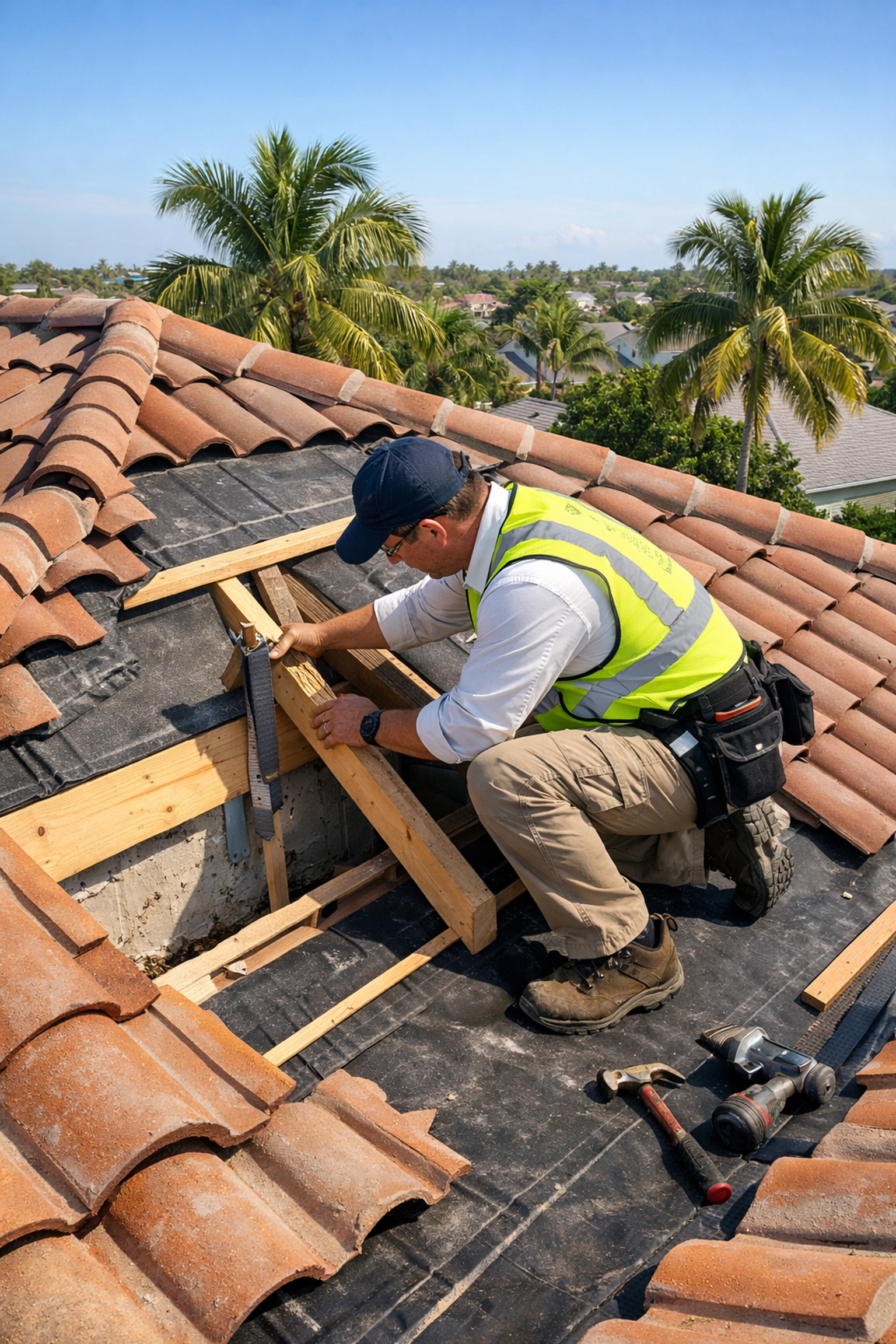
Roof integrity: Confirm your roof has a secondary water barrier (peel-and-stick underlayment) and proper hurricane straps that create a continuous load path from roof to foundation. Missing or corroded straps are invisible from the ground but catastrophic during a storm.
-
Garage door reinforcement: Garage door failure is the single most common structural failure point in high winds. Once a garage door blows in, wind pressurizes the interior of the home and lifts the roof off. Reinforce or replace garage doors rated for your zone's wind speed.
-
Hurricane shutters or pre-cut plywood: Permanently installed shutters are the gold standard, but if budget is tight, pre-cut 5/8" plywood labeled for each window works. Store it in the garage or a weatherproof shed so you're not scrambling at Home Depot when a storm forms.
-
Elevate critical equipment: If your property has any flood risk, move washers, dryers, water heaters, and HVAC components to elevated platforms or upper floors. Replacing a flooded HVAC system costs $8,000–$15,000 and takes weeks during peak season.
-
Trim trees and clear drainage: Dead branches become projectiles. Clogged gutters and downspouts turn minor rainfall into foundation flooding. This is basic maintenance that protects your property year-round: but it's non-negotiable before hurricane season.
Emergency Supplies & Tenant Communication: Plan for 7–10 Days
The old "three-day supply" guidance is outdated.
Modern rapid-intensification storms (like Ian in 2022) can leave properties without power, water, or road access for a week or longer. If your property is occupied, your tenants need to be prepared: and you need a communication plan in place.
What tenants need on hand:
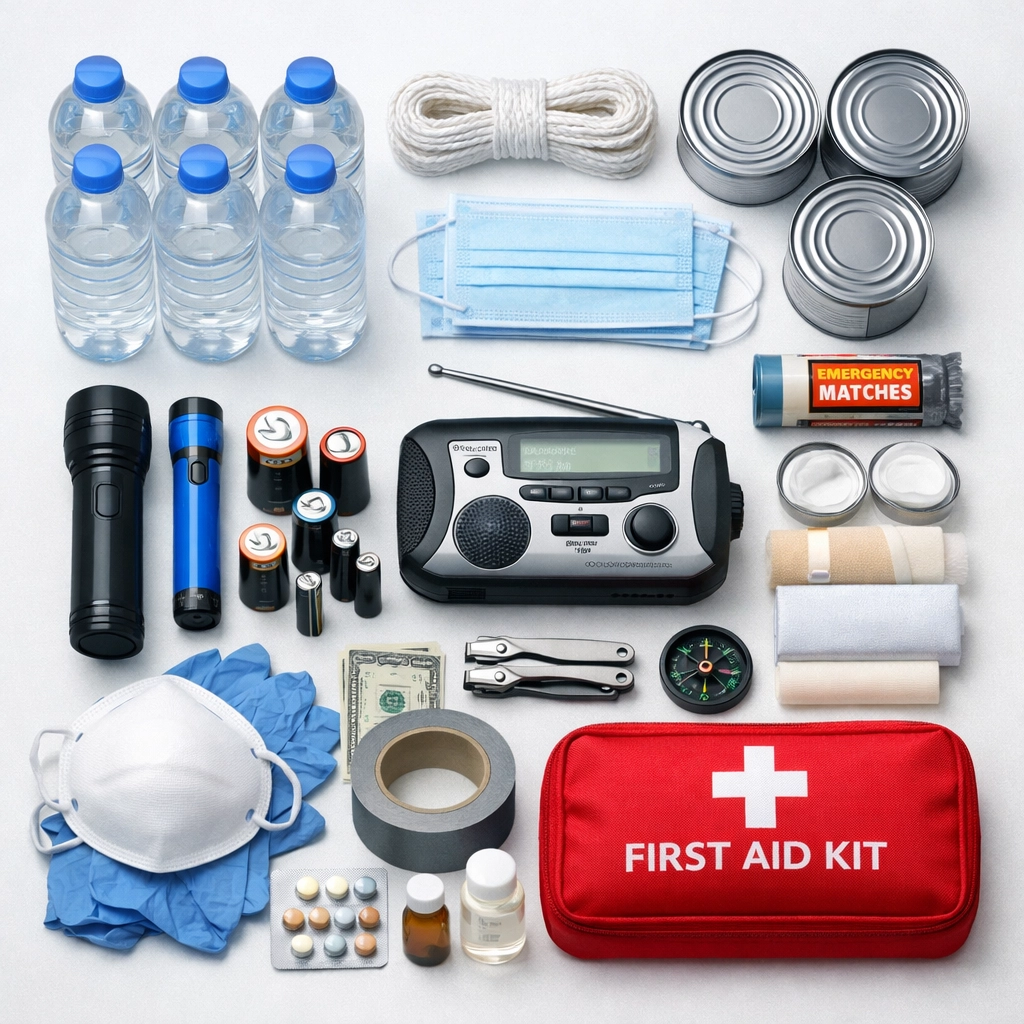
| Supply | Minimum Quantity |
|---|---|
| Water | 1 gallon per person per day (7–10 days) |
| Non-perishable food | Canned goods, protein bars, dry staples |
| Medications | 30-day supply + copies of prescriptions |
| Cash | $500+ in small bills (ATMs fail during outages) |
| Batteries, flashlights, radio | Weather radio and backup power for phones |
| Pet supplies | Food, leash, carrier, vaccination records |
Your role as the property owner:
- Provide tenants with a pre-storm checklist 48 hours before any tropical system enters the Gulf.
- Confirm they know their evacuation zone and route (FloridaDisaster.org/KnowYourZone).
- Establish a communication protocol: text updates, emergency contact numbers, and a plan for post-storm property access.
If your tenants evacuate and the property is unoccupied during landfall, you need someone local who can assess damage and file claims within 48 hours. Delayed claims cost you weeks of lost rental income and thousands in unrecovered expenses.
Pre-Storm Action Items: The 48-Hour Window
When the National Hurricane Center issues an advisory for Southwest Florida, you have roughly 48 hours before preparation becomes panic.
Immediate actions:
- Fuel vehicles and fill gas cans: Stations run dry fast.
- Turn refrigerators and freezers to coldest settings: Preserves food longer during power outages.
- Secure outdoor items: Patio furniture, grills, planters, and anything not bolted down becomes a missile in 100+ mph winds.
- Board windows: If you're using plywood, install it now: not during the outer bands.
- Shut off utilities if evacuating: Gas, water, and electricity should be turned off at the main if the property will be vacant during the storm.
If your property is in a mobile home or manufactured housing, evacuation is mandatory. Tie-downs won't hold in a major hurricane.
How Sure Guard Protects Your Property Year-Round
Hurricane prep isn't a June problem. It's a January–December discipline.
At Sure Guard Property Services, we build proactive maintenance and inspection protocols into every Fort Myers and Naples property we manage. That means:
- Quarterly property inspections that catch roof damage, drainage issues, and structural vulnerabilities before storm season.
- Vetted contractor relationships that give our owners priority access to roofers, tree services, and shuttering companies when availability is tight.
- Insurance coordination to ensure coverage gaps are identified and closed months before hurricane season: not days before landfall.
- 24/7 emergency response during and after storms, with boots on the ground to assess damage, file claims, and coordinate repairs while you're managing from out of state.
Our job isn't to react when the storm hits. It's to make sure your property is storm-ready long before the forecast cone appears.
Final Thought: Preparation Beats Panic Every Time
You can't control where a hurricane makes landfall. But you can control whether your property is insured correctly, structurally sound, and managed by a team that treats storm prep like the high-stakes process it is.
The owners who sleep well during hurricane season are the ones who made decisions in February: not frantic calls in late August.
Ready to hand off the hurricane prep, insurance coordination, and emergency response to a team that's been through it?
Request the Management Agreement Packet and let's talk about how Sure Guard builds year-round property protection into everything we do for Fort Myers and Naples property owners.
Because peace of mind shouldn't depend on the forecast.